Are you planning a trip to Bosnia and Herzegovina? I have been living in Sarajevo for almost five years and have traveled throughout almost the entire country. Here is a summary of everything you need to know for your vacation.
During my first few years after moving to Sarajevo, I was mainly busy trying to convince my friends to come to Bosnia. But once they've all been here... they keep coming back! My adopted home is simply one of those Balkan destinations that you can't forget, from the cities to the unspoiled nature.
However, information is still scarce, so I have summarized all the information and the best tips for your trip to Bosnia and Herzegovina here.

This blog article contains personal recommendations in the form of affiliate links. If you book or buy something via the links, I will receive a small commission. This does not change the price for you at all. Thank you for your support.
Jump directly to ↓
How to get to Bosnia
By plane
There are four international airports in Bosnia and Herzegovina. Eurowings, WizzAir, Ryanair, Austrian Airlines and Lufthansa but also Turkish Airlines or Pegasus offer many direct as well as connecting flights.
- Sarajevo International Airport (SJJ)
- Tuzla International Airport (TZL)
- Banja Luka International Airport (BNX)
- Mostar International Airport (OMO)
Theoretically, you can also fly to Croatia (Zagreb, Split, or Dubrovnik) and enter the country by rental car from there.
You can read about the best travel options from Dubrovnik to Sarajevo here . Here you will find the best routes from Split to Sarajevo.
By car
If you are traveling with your own car, you will have to pay tolls on Bosnian highways – but you don't need to buy a vignette, as you will be charged according to distance at fixed toll stations. German driver's licenses are recognized. You can find more information on traffic rules and driving at ADAC.
You will have the most flexibility on your trip if you rent a car. Driving in Bosnia is not as wild as in Albania or other Balkan countries, but be prepared for winding roads. It is also best to book accommodation with secure parking, regardless of whether you are traveling in a rental car or your own car.
I always rent cars from Discovercars with full coverage. You can find rental cars in Sarajevo here..
By bus or train
I would only recommend traveling by bus to a limited extent, as the distances are really long. You can take the train to Split and then continue your journey by bus or rental car.
You can also get from A to B easily by bus within Bosnia, but the journey times can be quite long. If you cross the border by bus, you should be prepared for long waiting times at passport control.

What documents are required for entry?
German, American or British citizens do not need a visa to enter the country. You can stay in the country for up to 90 days within a six-month period without a visa. If you want to stay longer, you will need a valid residence permit.
You can enter the country with your passport or identity card if you are from an EU country. However, you must ensure that your travel document is valid at least for three more months at the departure date. For all other countries, check the entry requirements in advance.


When is the best time to travel to Bosnia and Herzegovina?
The best time to travel depends entirely on what you want to do.
Generally speaking, May and June and September and October are the best months to travel, in my opinion. The temperatures are perfect for city breaks and outdoor activities such as hiking , and neither Sarajevo nor Mostar are too crowded. In summer, both cities can get really busy (and hot: Mostar and Sarajevo regularly reach temperatures of over 40°C in July and August).
Winter is also a good season for skiers and winter sports enthusiasts. As the venue for the Winter Olympics, there are several ski resorts around Sarajevo..
The winter season between the beginning of December and the end of March is definitely the best time for skiers, but if you also want to go swimming, the summer months are recommended. However, temperatures in Herzegovina and Sarajevo can occasionally exceed 40°C in July and August. Spring and fall offer slightly cooler temperatures but still plenty of sunny days.
What is the Bosnian currency?
In Bosnia and Herzegovina, the currency is the convertible mark, abbreviated KM or BAM. One euro is always equal to 1.95583 KM, so converting is super easy. Another fun fact: the copper coins are called fenings, just like they used to be in Germany.

Is Bosnia a safe destination?
Yes, Bosnia and Herzegovina is an absolutely safe country to travel to! Many people still only associate the country with the Bosnian war, but this small Balkan country is so much more!
The crime rate in Bosnia-Herzegovina is low, so you can go on holiday without any worries. At most, petty crime such as pickpocketing can of course occur in tourist hotspots such as Sarajevo or Mostar.
If you are travelling with your own car, I recommend parking it in a guarded car park and not leaving anything open in the back seat - it can happen that vehicles with foreign number plates become the target of car theft and break-ins. But that's about it.
So you see: The same safety precautions apply in Bosnia-Herzegovina that you would take for your safety anywhere else!
And what about mines?
Many areas in Bosnia and Herzegovina are now mine-free. Nevertheless, I recommend that you stay on designated hiking trails when hiking and, if you are travelling by camper or motorhome, don't just drive around wildly in the forest.
The same applies to ruins and crumbling buildings. Yes, they are exciting to explore - but they are not safe. Buildings that have been under sniper fire or bombardment are therefore entered at your own risk.

Are there any cultural particularities for the destination that I should be aware of?
Women in particular often ask me: Can I dress however I want in Bosnia? The answer is yes! Bosnia and Herzegovina is a secular country and everyone can dress however they want. When visiting mosques and churches, men and women must cover their knees and shoulders. Headscarves are mandatory for women when visiting a mosque, but they are also provided if you don't have one. Travelling to Bosnia for Ramadan? I've summarised everything you need to know here.
Bosnians are generally Loud, sociable and joking people - You can definitely feel a southern influence. Community and friendship are important values in Bosnian society: as a regular customer, you will certainly be bought a drink in a restaurant or bar from time to time, and at the market you will almost always be given some fresh flowers, an apple or a mandarin to buy with your purchase.
I often have the feeling that Bosnians have no filter. So don't be surprised if even strangers ask you not only how you like it in Bosnia-Herzegovina, but also what your life is like in Germany, whether you are married or what job you do.
And it should go without saying that the Bosnian war is still a sensitive, traumatising topic. So if you want to ask Bosnians about their past and the war, always remain tactful and understanding and don't pressurise anyone into talking to you if they don't want to.
What are the best things to do and see in Bosnia and Herzegovina?
Sarajevo and Mostar are, of course, the main attractions in Bosnia and Herzegovina. However, I would definitely recommend visiting more than just these two cities—there is so much more to discover throughout the country. From mountains to cities to wine regions or even the coastline with the city of Neum.

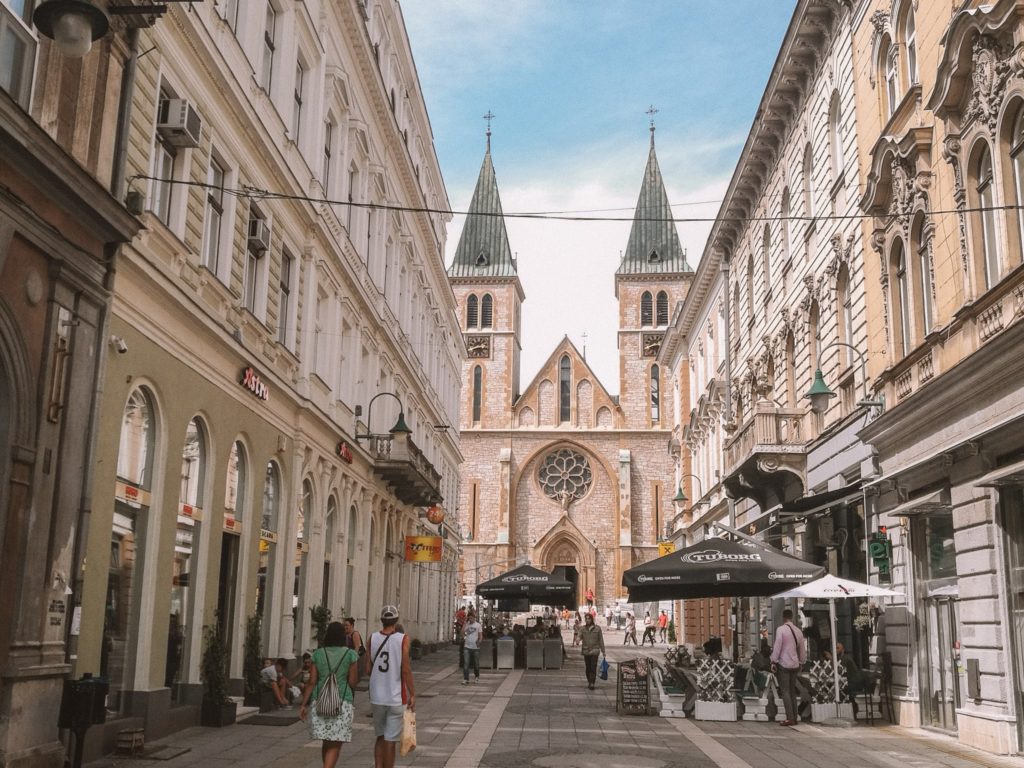
Sarajevo, the capital
Bosnia's capital Sarajevo should definitely be on your travel list. Whether you have two, three, or four days, there is plenty to do and discover in Sarajevo and the surrounding area. gibt es viel zu tun und zu entdecken.
The city's history dates back to 1462, and since then Sarajevo has seen many conquerors, rulers, and cultures, and today it remains a melting pot of East and West, Ottoman heritage, and Austro-Hungarian history. The most famous event, of course, is the assassination of Archduke Franz Ferdinand, which led to World War I. The different eras are still clearly visible in the city's architecture. With its four religions, mosques, cathedrals, and synagogues, Sarajevo is often called the “Jerusalem of Europe.” You can find the most important sights here. I have listed my insider tips here. And for the best restaurants, click here.
Sarajevo is sometimes called the “Jerusalem of Europe,” and in the old town you can see a mosque, cathedral, Orthodox church, and synagogue just a few meters apart. This multiculturalism has always made the city a special destination.
If you want to do a tour in Sarajevo, I can recommend a city tour with Bosnian coffee tasting or a food tour off the beaten path?
Where to stay in Sarajevo
- 💲 Heritage Hotel Petrakija: Cosy boutique hotel just behind the Sacred Heart Cathedral in the old Jewish quarter
- 💲💲 Hotel Eleven: a modern and new hotel in the old town, just a stone's throw from all major sights
- 💲💲 Hotel Ovo Malo Duše: Small boutique hotel in the middle of the old town with beautiful, Bosnian-style decorated rooms
- 💲💲 Isa-Begov Hamam Hotel: Boutique Hotel with Ottoman-style rooms and a working hamam
- 💲💲💲 Hotel Central: Located in an old Austro-Hungarian building with gym and spa
- 💲💲💲 Hotel Baškuća: Beautiful boutique hotel with a Bosnian designer interior and an excellent restaurant on-site


Mostar
A trip to Mostar isn't complete without walking across the old bridge, which is a UNESCO World Heritage Site. Or without watching the bridge divers as they plunge 20 meters into the depths below. But the city has much more to offer . I would recommend staying at least one night so you can experience the city in the morning or evening hours when most of the day tourists have left. Or you couldstay three days and also explore Herzegovina and the surrounding area.
Where to stay in Mostar
- 💲 Hotel Hana: Simple but clean hotel in a central location with quiet rooms
- 💲💲 Villa Gunga: Apartments in the centre of Mostar with a view of the crooked bridge
- 💲💲 Shangri La Mansion: Beautiful family-run hotel near the city centre
- 💲💲💲 Muslibegović House: Stay in an old Ottman house and museum
- 💲💲💲 Hotel Kriva Ćuprija: Located directly on the Crooked Bridge
The Dervish Monastery in Blagaj
Right at the source of the Buna River lies one of Sarajevo's most photographed landmarks: the Dervish Monastery of Blagaj. Today, there are no longer any Sufi monks living in the tekija; the building is now a museum of Ottoman and Sufi culture. You can eat fresh trout right next to the monastery or spend the whole day in Blagaj. I have listed the best things to see and do in Blagaj here.
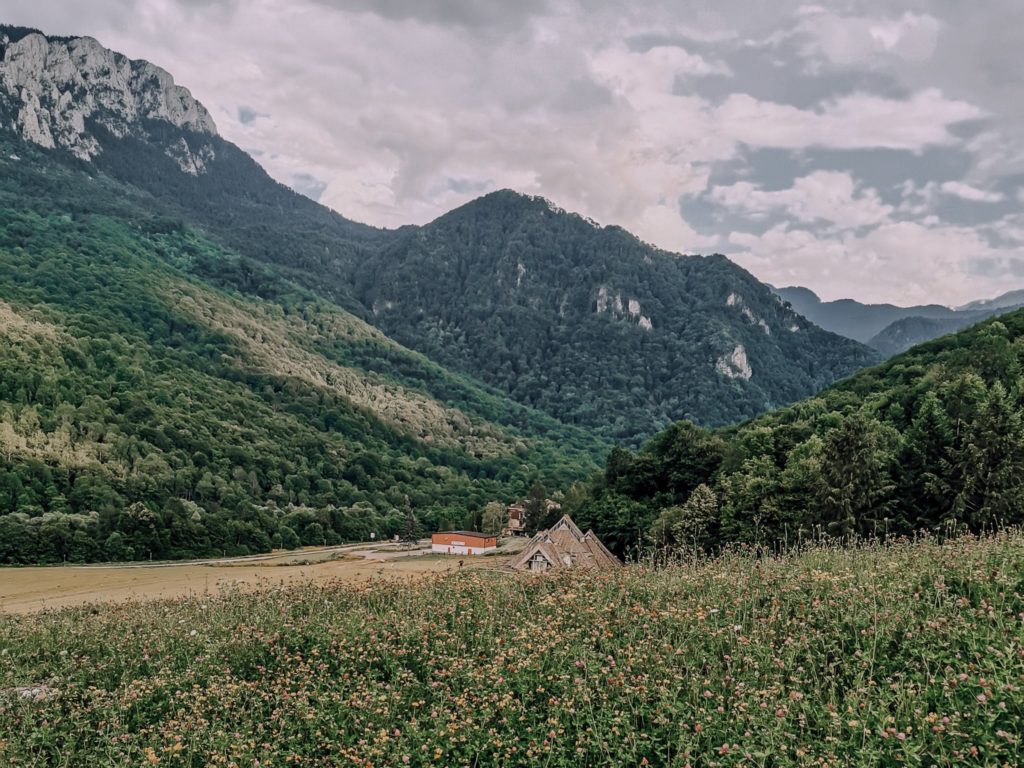

Sutjeska National Park
Sutjeska National Park is located directly on the border with Montenegro and is the most beautiful hiking area in Bosnia and Herzegovina with numerous routes. Here you will also find one of the last primeval forests in Europe, which you can hike through with a certified guide (only 16 people per day are allowed to enter the primeval forest – a unique experience!). You can find more hiking routes in Sutjeska here.
Počitelj
This small Ottoman village is picturesquely nestled in the hills above the Neretva River. You can stroll up to the castle through narrow streets, passing the Šišman Ibrahim-immersed Mosque. Počitelj was once a showcase of Ottoman architecture, but today the village is almost uninhabited. Nevertheless, it is worth a visit; for me, it always has something enchanting about it.

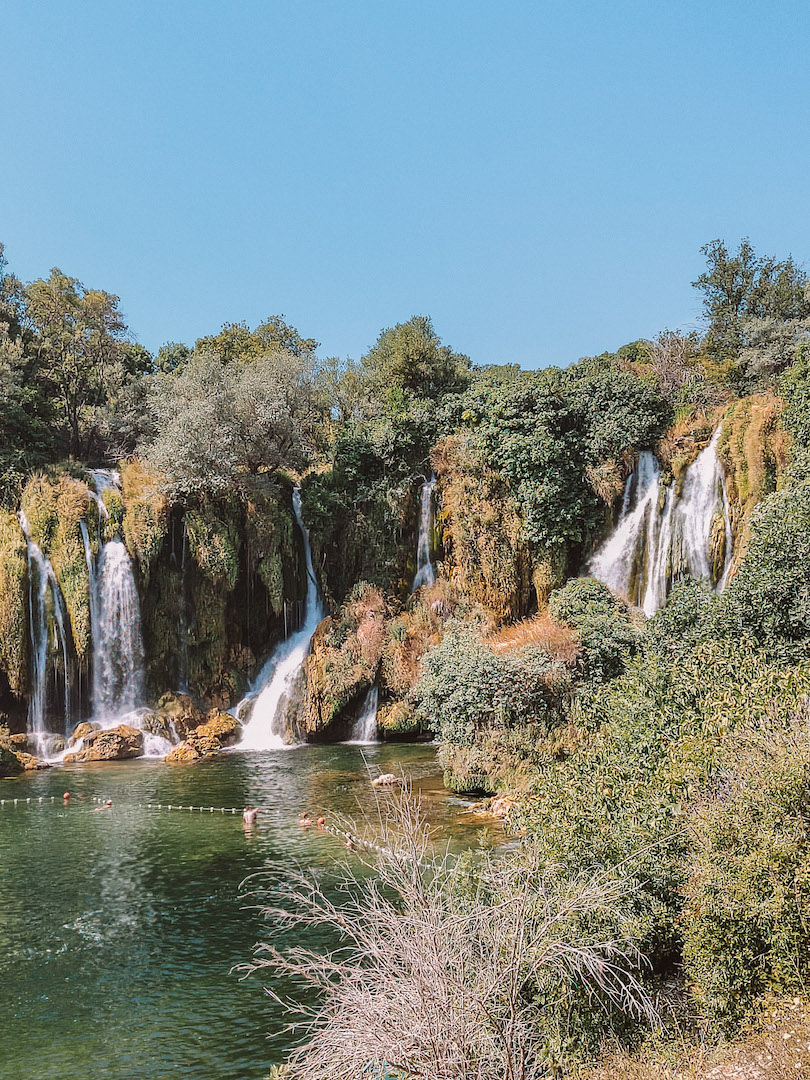
Kravica waterfalls
Kravica is also not an insider tip for your holiday in Bosnia and Herzegovina - the waterfalls are known beyond the country's borders. However, they really are impressive! The water of the Trebizat River plunges 25 metres into the depths and forms a small lake at the foot of the waterfalls, where you can even swim.
I would recommend travelling to the waterfalls early in the morning, as it gets very crowded every day from 11.00 a.m. at the latest. You can find more tips and a guide to Kravica here.
Jajce
There are many cities worth visiting in Bosnia, even outside Sarajevo and Mostar. Although Bosnia is a small country, it combines an incredible amount of history and culture. If you have time, you should therefore also visit the medieval town of Jajce - former seat of the Bosnian kings and founding place of Yugoslavia.
Jajce is best known for the Pliva Waterfall, which plunges into the depths in the middle of the city, creating a special city panorama. You have the best view of the waterfall from this viewpoint, which I listed in my Bosnia travel guide.
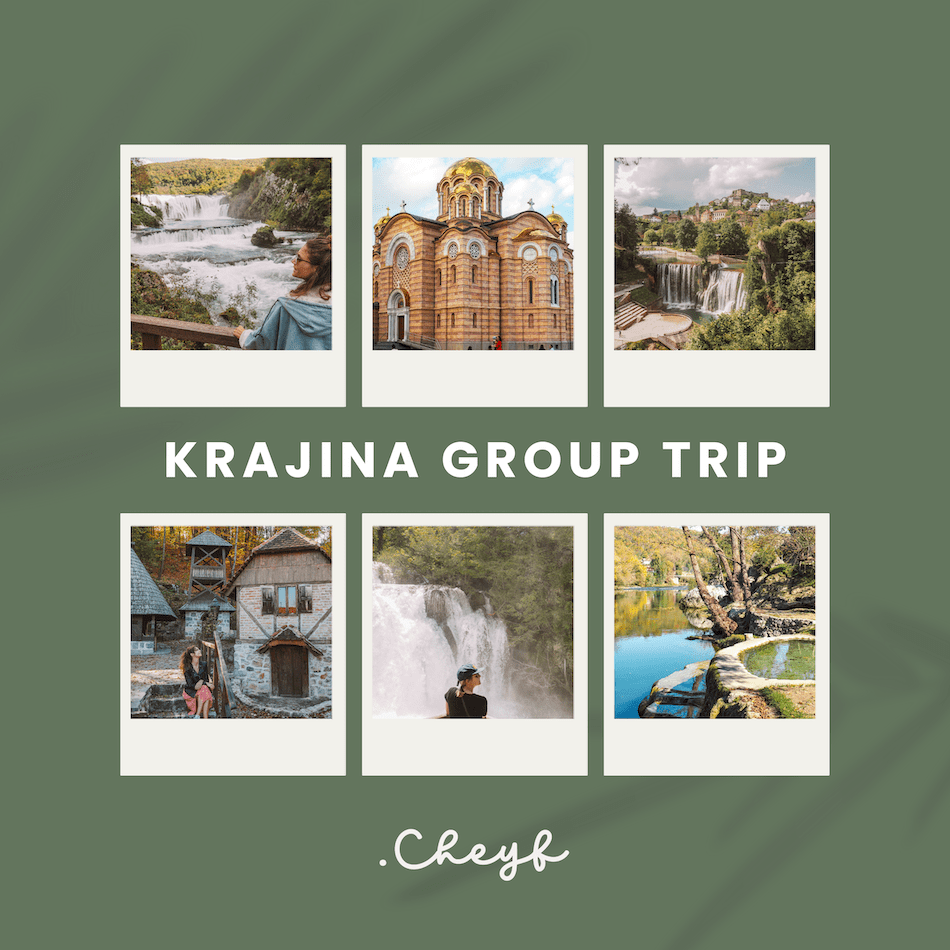
Travel through Bosnia with me!
Exclusive group tour by Cheyf: Kings, Queens, and Waterfalls
Discover the city of Bosnian kings, Jajce, kayak with me on the Una River for an afternoon, learn how to make UNESCO-protected snakeembroidery, bathe in hot springs, and taste Bosnian wine.
Krajina is one of the most underrated regions of Bosnia and Herzegovina, and now you can get to know it as well as if you were traveling with your local friends!
Other cool places to see and things to do in Bosnia and Herzegovina
My favorite city in Bosnia and Herzegovina is Trebinje, just 45 minutes from Dubrovnik . But the north of Bosnia, Bihać and the Una National Park or Banja Luka also offer beautiful nature and delicious food.
When it comes to outdoor activities, you are spoiled for choice: hiking, rafting, mountain biking, climbing, or kayaking. If you are unsure about what you want to see and do on your trip, feel free to book a free consultation call with our travel agency .Cheyf , and we will help you choose and plan.

How expensive is a holiday in Bosnia and Herzegovina?
In general, Bosnia and Herzegovina is one of the cheapest travel destinations in Europe. You can book many activities for less than €100. A night in a mid-range hotel in a double room costs around €30-50 per person. Dinner with drinks costs between €15 and €25 in the capital Sarajevo or in Mostar, and is cheaper outside the tourist destinations. As you can see, a vacation in Bosnia and Herzegovina can be as inexpensive or as expensive as you want it to be.

Looking for your dream holiday in Bosnia and Herzegovina?
Together with my Bosnian husband, I founded .Cheyf a boutique travel agency for mindful travelling in Bosnia-Herzegovina.
Our speciality? Customised trips where you can really get in touch with locals and immerse yourself in Bosnia. Get in touch for a free consultation call!